 English
 Español
When selecting a Digital Air Oven, the interior material is a critical factor affecting food safety, durability, and cleaning efficiency. The market is currently dominated by three primary materials: Stainless Steel, Enamel, and Teflon Coating. This professional analysis explores these materials across four dimensions: physical properties, thermal efficiency, chemical safety, and maintenance costs.
Stainless Steel Interior: The Non-Coated Standard for Durability
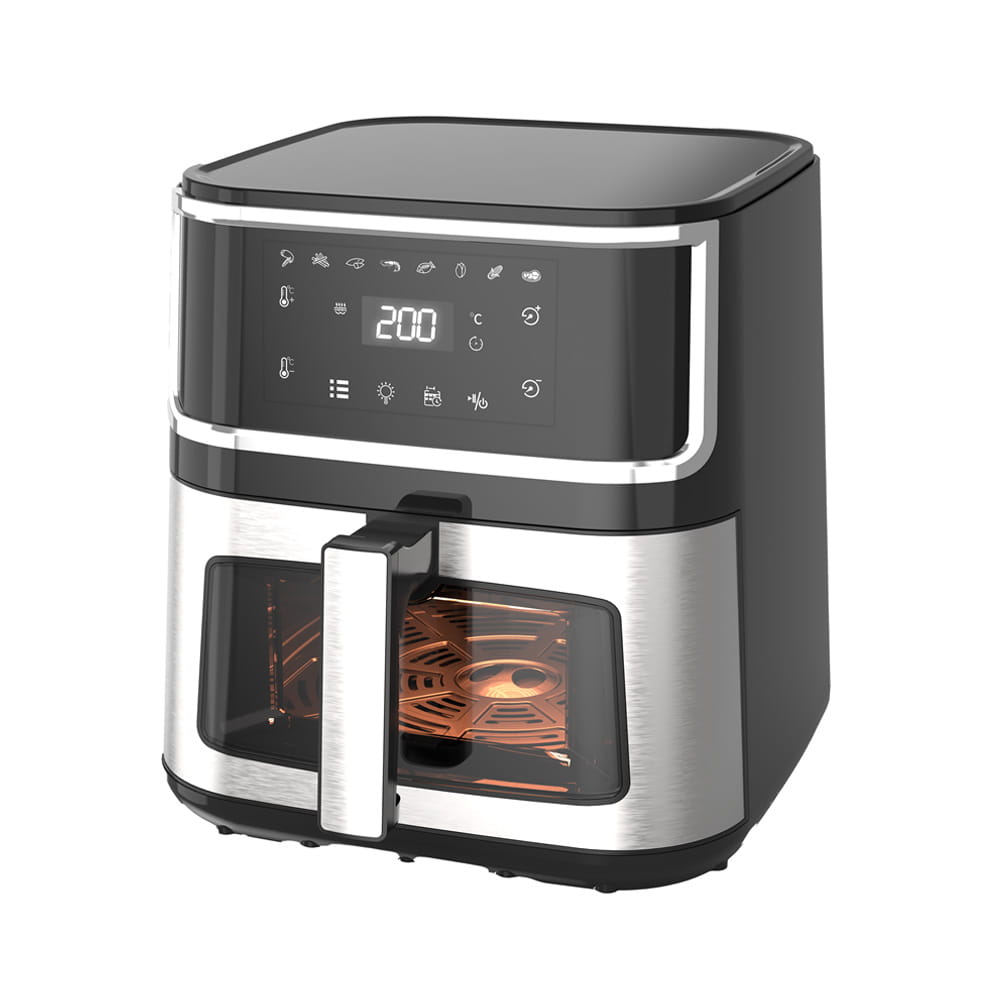
Stainless Steel (typically 304 or 430 grade) is the preferred material for high-end Digital Air Oven models. Its primary value proposition lies in physical stability and zero chemical risk.
Extreme Durability and Safety
The greatest advantage of Stainless Steel is that it is a "raw material" without any chemical coatings. During long-term high-temperature roasting (above 200°C), it does not release harmful substances such as PFAS, PFOA, or PTFE. Furthermore, stainless steel resists scratches from sharp kitchen tools, ensuring no coating particles flake off into food even under heavy use.
Heat Reflection and Distribution
The surface of stainless steel offers excellent heat reflection properties. Working with the Digital Air Oven convection system, the interior walls efficiently bounce infrared heat back onto the food surface. While it lacks "non-stick" properties, its stable performance in professional Baking and meat processing makes it a favorite for experienced users.
Enamel Interior: Balancing Cleaning Efficiency and Thermal Performance
Enamel (porcelain enamel) is created by fusing inorganic glass powder to a steel plate at high temperatures. It is commonly found in mid-to-high-end Countertop Air Oven units.
Superior Easy-to-clean Performance
The Enamel surface is as smooth as glass, with hydrophobic and oleophobic properties that far exceed stainless steel. Oil stains do not easily penetrate the substrate after high-temperature cooking, usually requiring only a damp cloth to restore cleanliness. For users frequently cooking high-fat foods like roast chicken, Enamel significantly reduces the maintenance burden.
Thermal Retention and Stability
Enamel layers have a high heat capacity, helping to maintain a more constant temperature field inside the cavity. During Baking operations in a Digital Air Oven, the enamel interior compensates for temperature fluctuations when the door is opened. However, its brittleness means it can chip or crack if subjected to severe mechanical impact or Thermal Shock.
Teflon Coating: The Edge in Cost-Effectiveness and Initial Experience
Teflon Coating (fluoropolymer) is frequently used in entry-level Air Fryer Oven models and various internal accessories.
Physical Non-stick Limit
In terms of "non-stick" performance, Teflon is the absolute champion. Grease and food residues find it nearly impossible to adhere to the surface. For beginners or those seeking maximum convenience, Teflon Coating provides an excellent initial user experience.
Safety Concerns at High Temperatures
While Teflon is safe at normal cooking temperatures, the coating may begin to degrade and release fumes if temperatures exceed 260°C. Additionally, the lifespan is relatively short; once scratches or peeling occur, the underlying aluminum or steel is exposed, leading to rust risks and the potential ingestion of coating particles. In the High-end healthy appliance market, the use of this material is gradually declining.
Cross-Comparison of Interior Materials
| Dimension | Stainless Steel | Enamel | Teflon Coating |
| Food Safety | Extreme (No Coating) | High (Inorganic) | Medium (Avoid Overheating) |
| Scratch Resistance | Excellent | Medium (Fragile) | Low |
| Cleaning Ease | Medium (Water Spots) | Excellent | Excellent (Initial) |
| Heat Uniformity | Good Reflection | Good Retention | Standard |
| Service Life | 10+ Years | 5-10 Years | 1-3 Years |
Industry Outlook: Selecting Based on Scenarios
For brands focusing on long-term reputation or health-conscious consumers, Stainless Steel is the definitive Premium Choice. It represents a longer product lifecycle and higher environmental standards.
For home users prioritizing ease of cleaning, Enamel interiors offer better overall value, especially in handling heavy grease. Teflon Coating remains suitable for budget-friendly scenarios where the replacement frequency is expected to be higher.