 English
 Español
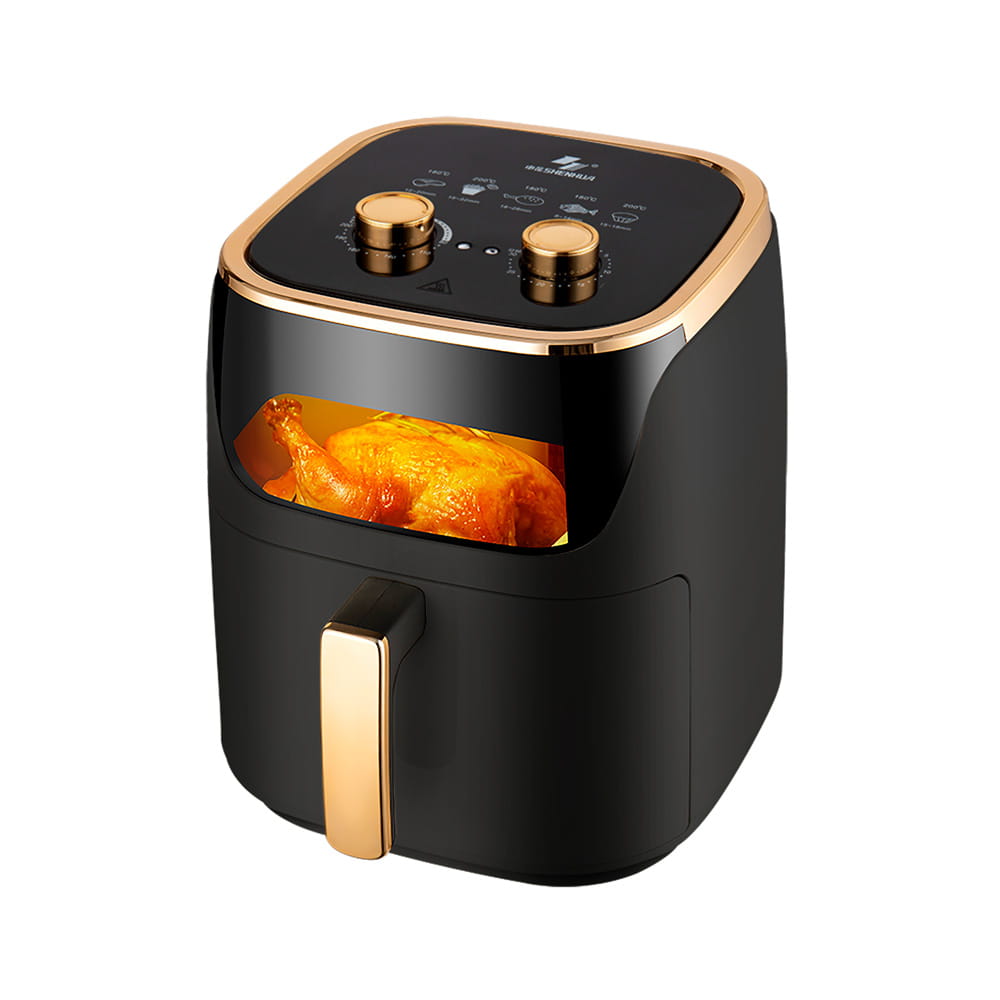
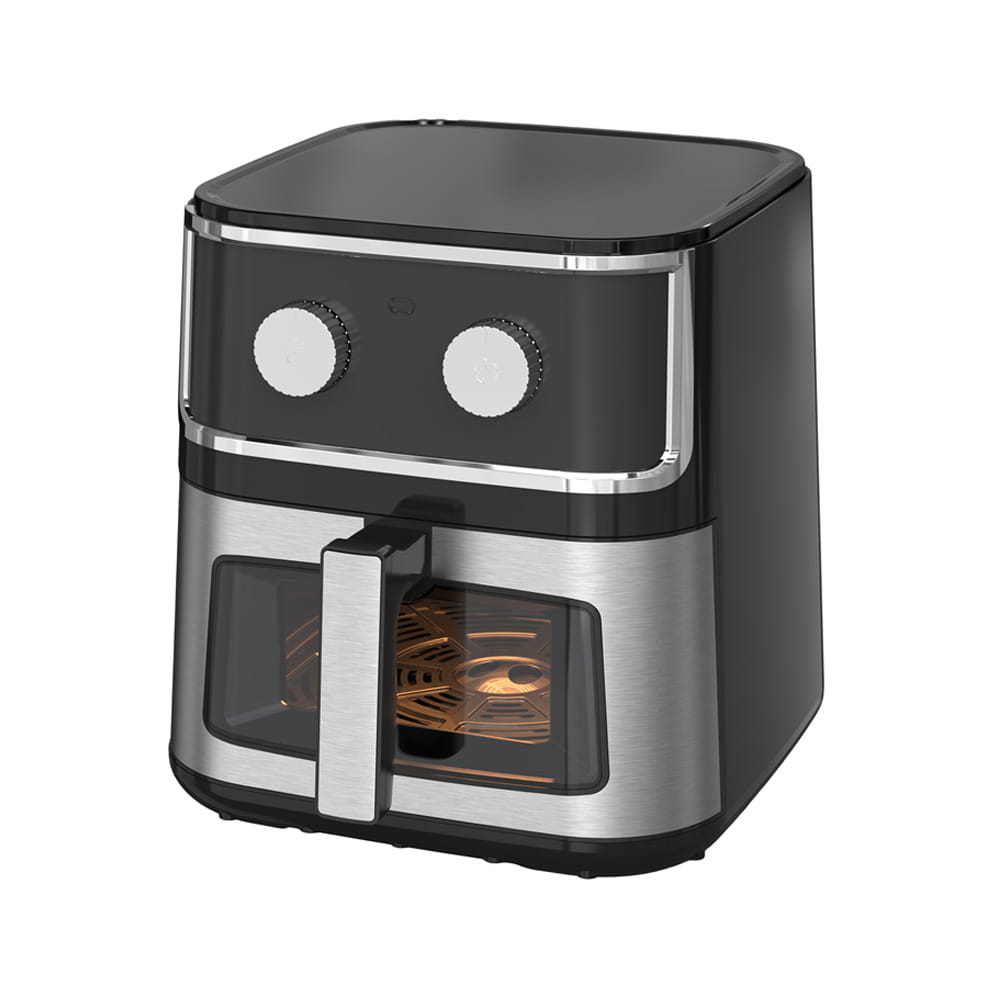
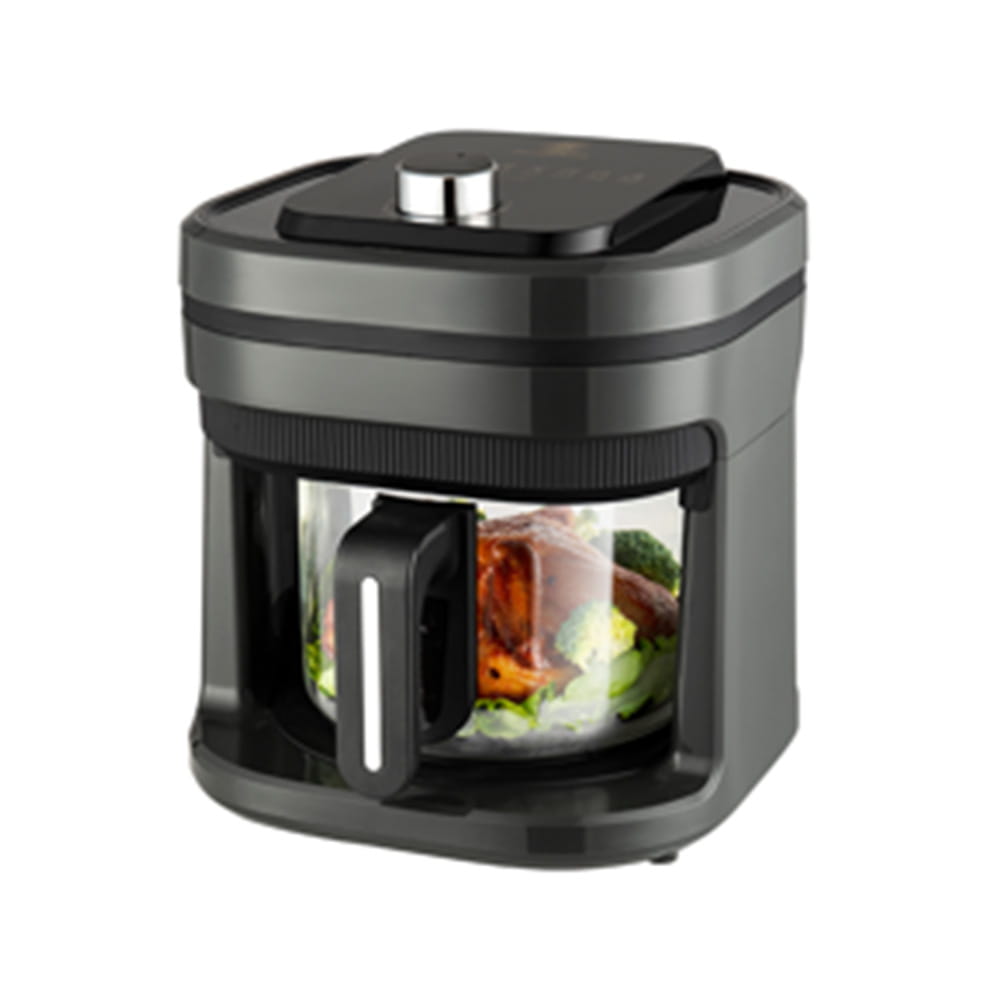
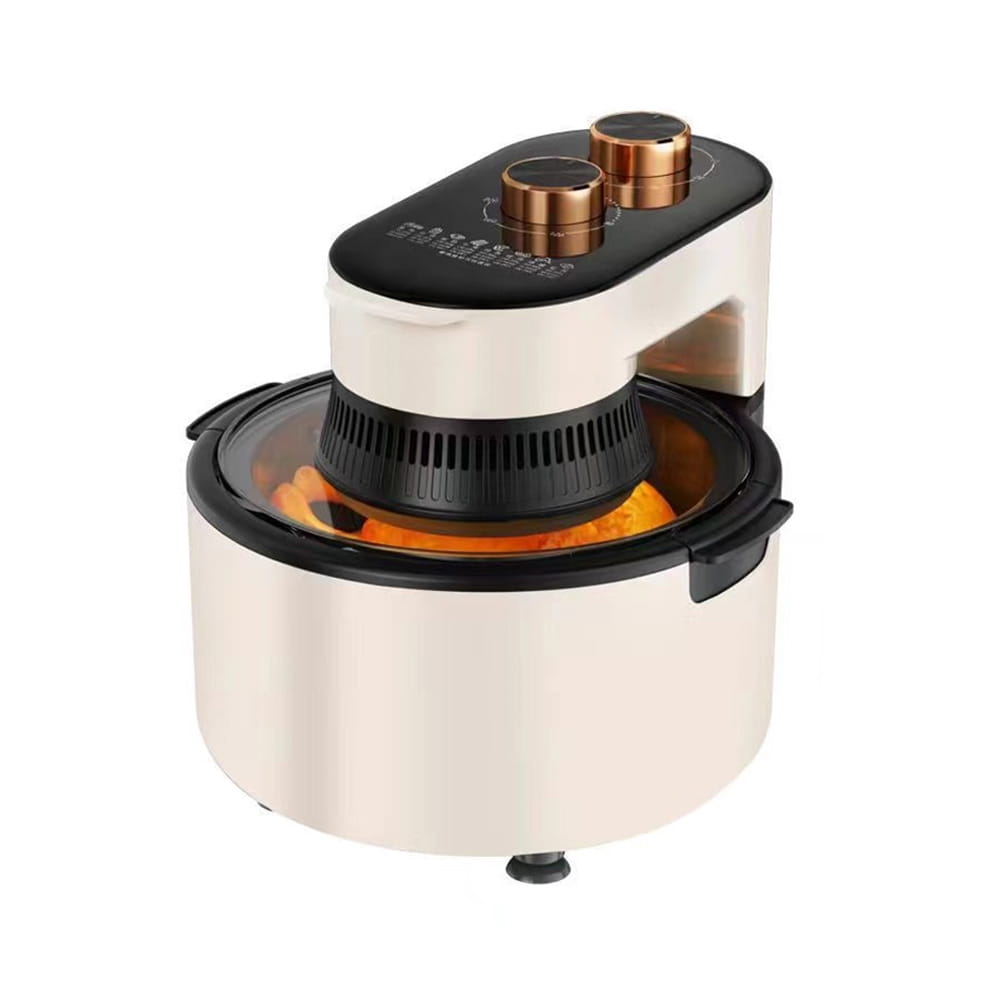
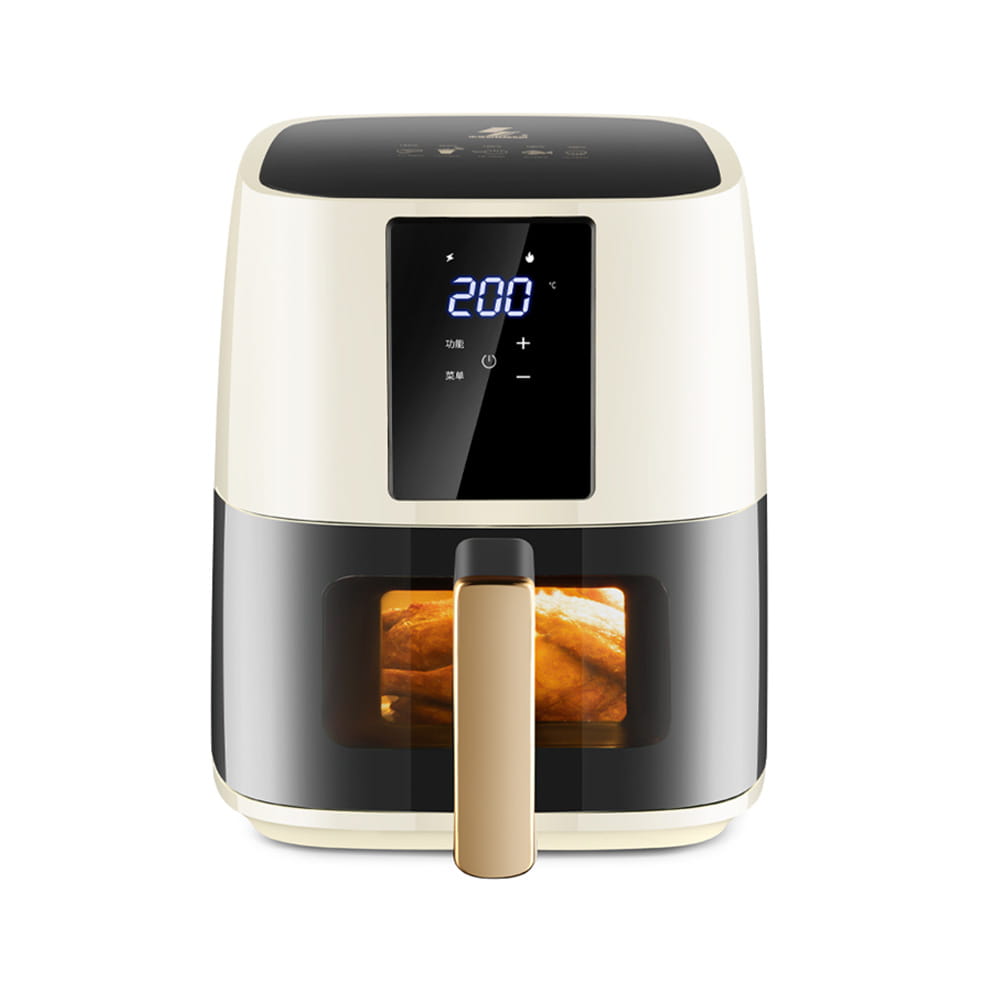
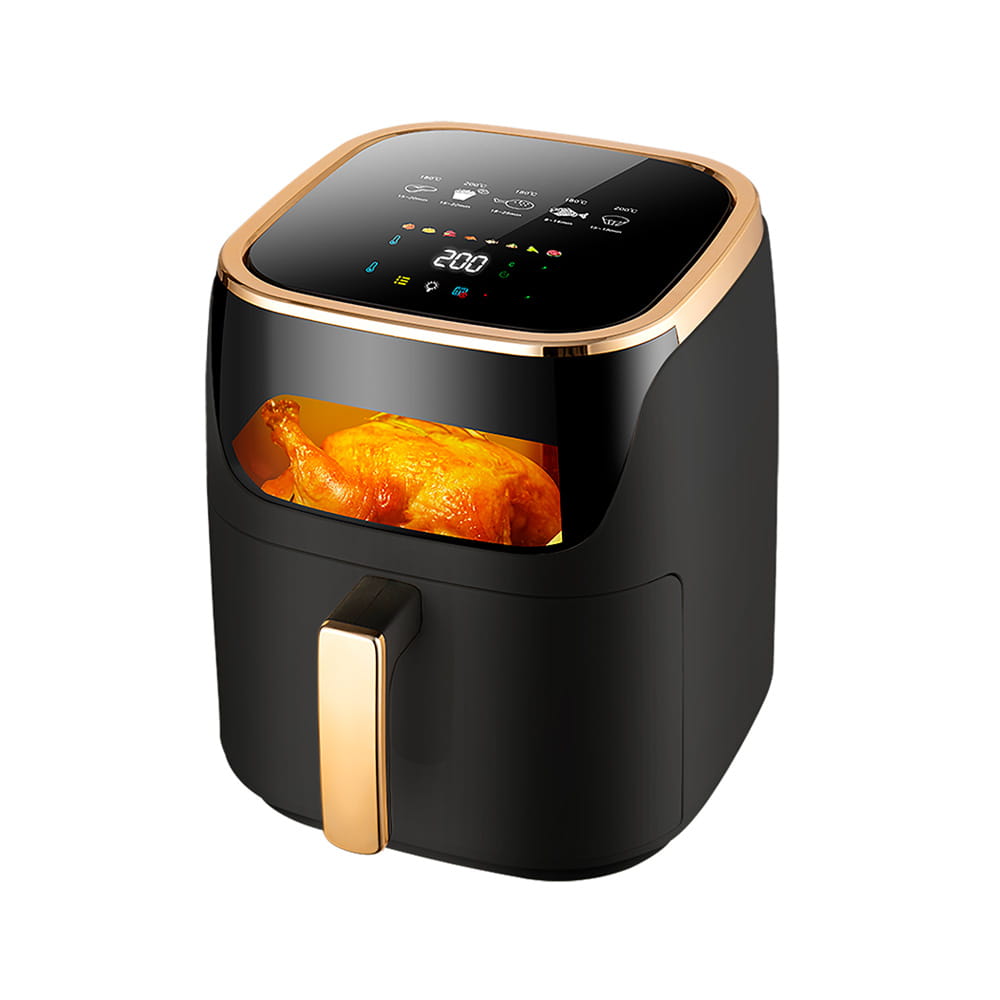
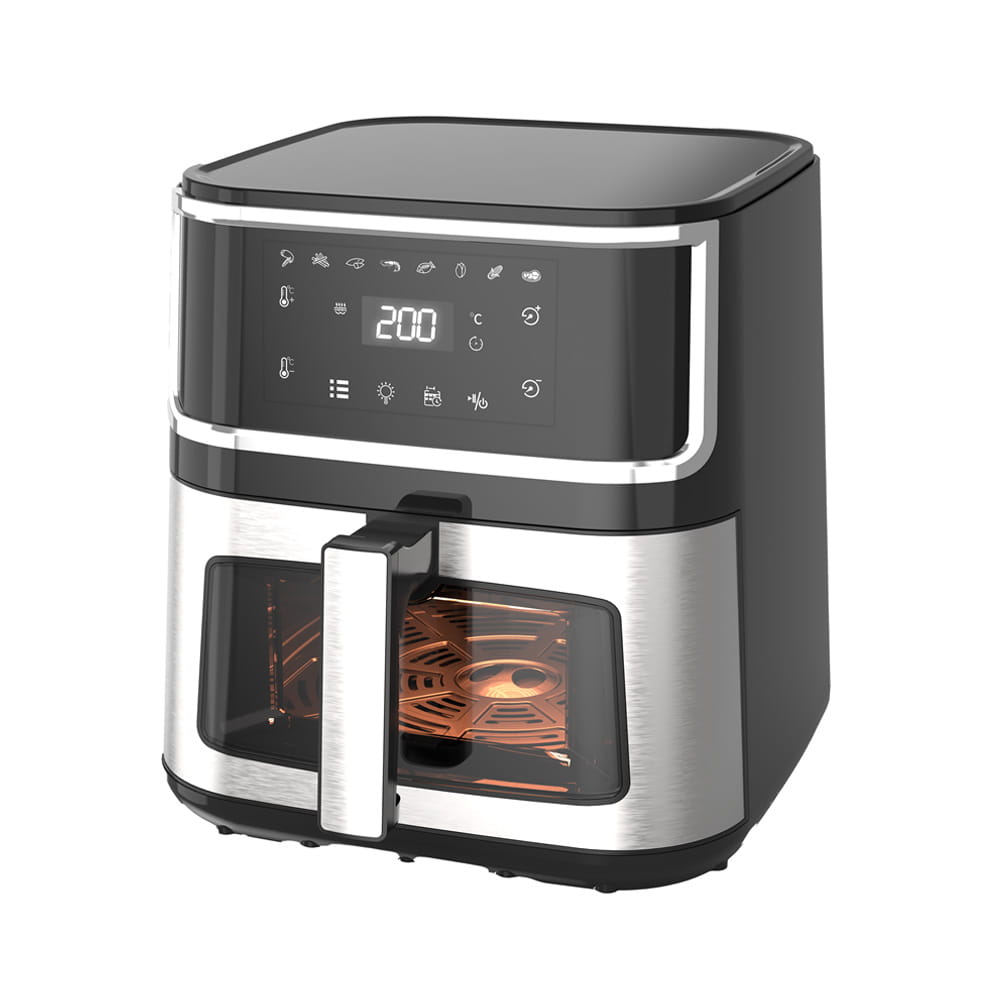
Detachable LCD visual air fryers introduce transparent viewing structures into a traditionally sealed metal cooking chamber. While this design significantly enhances user interaction and cooking visibility, it also raises important engineering considerations regarding internal airflow circulation. Airflow is the core mechanism that enables an air fryer to deliver uniform heating, consistent texture, and efficient moisture removal. Any modification to internal structure must be evaluated from a fluid dynamics and thermal management perspective.
Fundamental Airflow Principles in Air Fryer Systems
Air fryers operate by combining a high-speed fan with a heating element to generate a continuous loop of hot air circulation within a confined chamber. The airflow path is engineered to maintain stable velocity, balanced pressure, and smooth directional transitions. Effective circulation minimizes temperature gradients and ensures that food surfaces receive uniform heat exposure.
The airflow system typically consists of an air inlet, heating zone, fan-driven circulation channel, cooking cavity, and return airflow path. Structural modifications within this system inevitably influence airflow behavior.
Physical Impact of Visual Structures on Airflow Paths
Visual structures usually occupy the front or side area of the cooking chamber and are constructed from tempered glass or high-temperature-resistant polymer materials. These materials differ from metal in thickness, surface smoothness, and thermal conductivity. As airflow contacts the transparent surface, boundary layer behavior changes, potentially altering local airflow velocity.
If poorly integrated, the edges of the viewing window may cause airflow separation or turbulence, resulting in localized low-velocity zones. Such zones can reduce heat transfer efficiency to food positioned near the window, potentially affecting cooking uniformity.
Relationship Between Window Geometry and Airflow Stability
The size, shape, and contour of the viewing window play a decisive role in airflow performance. Large flat surfaces may reflect airflow rather than guide it, while curved or slightly recessed window designs encourage airflow attachment along the surface. Abrupt transitions at window frames can act as airflow obstacles, disturbing the smooth circulation pattern.
Advanced detachable LCD visual air fryers often incorporate concealed airflow guides or micro-curvature along the window perimeter. These design features allow hot air to glide across the transparent surface rather than collide with it directly, preserving circulation efficiency.
Thermal Efficiency and Temperature Distribution Considerations
Transparent materials generally have lower thermal conductivity than metal chamber walls. This characteristic influences heat retention and localized temperature behavior. The window area may retain heat differently, creating a micro thermal zone within the cooking cavity.
When properly engineered, this localized heat behavior can contribute to more consistent front-to-back temperature distribution. Without thermal compensation in control algorithms or sensor placement, discrepancies between measured air temperature and actual food surface temperature may arise.
Influence of Internal Lighting on Airflow Dynamics
Visual air fryers commonly integrate internal lighting systems to enhance food visibility. Lighting components introduce additional physical elements within the airflow environment. Large light housings or poorly positioned fixtures may obstruct airflow, creating shadow zones with reduced convection.
Professional designs minimize this impact by using compact, heat-resistant LED modules positioned outside the primary airflow channel. This approach allows illumination without compromising airflow continuity or thermal balance.
Indirect Airflow Effects of Detachable LCD Structures
The detachable LCD module itself does not directly interact with internal airflow, as it is positioned outside the cooking chamber. However, its mounting area is part of the appliance’s overall pressure containment system. Inadequate sealing between the LCD module and the main housing can lead to air leakage, reducing internal pressure stability.
High-quality designs employ multi-layer sealing mechanisms to ensure that detachable interfaces do not compromise airflow integrity or cooking efficiency.
Engineering Controls for Managing Visual Structure Impact
Manufacturers of high-end detachable LCD visual air fryers rely on computational fluid dynamics simulations during product development. These simulations analyze airflow velocity, turbulence distribution, and heat transfer behavior with the visual structure integrated.
Design variables such as fan speed, duct curvature, chamber volume, and window placement are optimized together. Physical testing with various food loads validates that the visual structure does not negatively affect airflow performance or cooking consistency.